Orya One at AI WEEK Milan: What Businesses Should Actually Learn from the AI Boom
Orya One visited AI WEEK Milan to study how AI is being adopted across business, cybersecurity, healthcare, marketing, and software operations.

Mr. Kampouridis Dimitris
Founder · Orya One
Field notes10 min read

- of sessions
- 2 days
- speakers
- 50+
- leader interviews
- 3
- clear pattern
- 1
01 · From artificial intelligence hype to operational intelligence
Artificial intelligence is no longer an isolated technological trend. It is becoming a structural layer inside modern organisations: a computational infrastructure that affects how companies collect information, interpret data, automate decisions, design workflows, and govern risk.
Orya One visited AI WEEK Milan 2026 to observe this transition directly. The event brought together international speakers, companies, entrepreneurs, and technology leaders across multiple stages, with a clear focus on practical implementation in business environments.
For Orya One, the value of the event was not only in the technologies presented, but in the patterns that emerged across conversations, technical sessions, and executive-level discussions.
02 · AI is evolving from tool adoption to system architecture
A common misconception in the market is that artificial intelligence adoption begins with purchasing an AI tool. In practice, this is usually the least important part of the process.
The more critical question is architectural: where does AI sit inside the organisation's workflow?
AI becomes useful only when it is connected to data sources, operational processes, business logic, validation mechanisms, and human decision-making structures. Without this context, AI remains a disconnected interface: impressive in demonstration, but weak in production.
The mature conversations at AI WEEK Milan were not focused on isolated prompts, generic chatbots, or superficial automation. They were focused on applied intelligence: systems that support customer care, reporting, compliance workflows, predictive maintenance, content operations, sales processes, and executive decision-making.
03 · Operational AI requires data discipline before model intelligence
From a scientific and engineering perspective, AI performance is constrained by the quality of the system around it. A model cannot compensate for undefined processes, fragmented data, weak access controls, or unclear business objectives.
Many organisations are currently approaching AI from the wrong direction. They start with “Which AI tool should we use?” A better question is: which operational process produces enough structured information, measurable outcomes, and repeatable decisions to benefit from AI augmentation?
This shift matters because artificial intelligence systems are probabilistic. If the input data is incomplete, unverified, biased, or disconnected from business reality, the system may produce outputs that look plausible but are operationally unreliable.
- Data quality and accessibility
- Workflow repeatability
- Information sensitivity
- Cost of incorrect outputs
- Human supervision requirements
- Success metrics
04 · Governance is becoming a core requirement, not an optional layer
One of the strongest themes across AI WEEK Milan was the need for governance. As AI becomes embedded in business operations, companies must define boundaries around what the system can access, what it can generate, who validates its output, and how errors are handled.
A business that deploys AI without governance may create new risks in privacy, compliance, cybersecurity, customer trust, and internal decision-making. The danger is not only that AI may produce incorrect information. The deeper issue is that incorrect information may become operationally accepted if no validation structure exists.
- Human-in-the-loop review
- Access control
- Data minimisation
- Audit trails
- Output validation
- Clear escalation rules
05 · Conversations with technology leaders confirmed the same pattern
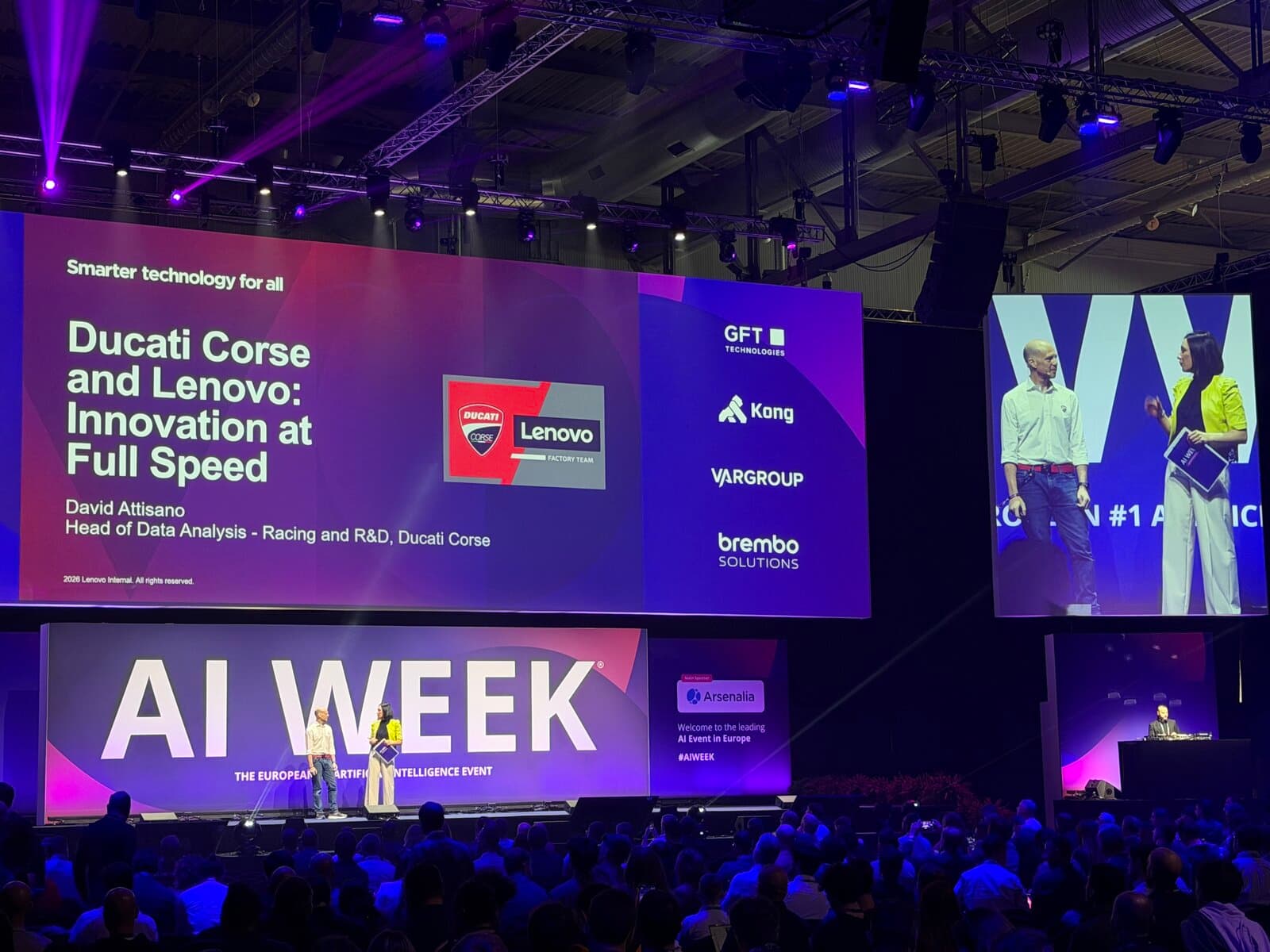
During the event, Orya One exchanged views with the CTO of Vittì / VT – Solutions & Consulting, the CEO of AgenVIO, and the CEO of Syncronika.it. We also attended sessions delivered by Google professionals where responsible implementation, engineering discipline, and practical AI adoption were discussed.
The shared market direction was clear: businesses are moving from abstract AI interest toward concrete operational use cases. The more serious question is no longer only what AI can do. It is how AI can be safely embedded into the way an organisation actually works.
This matters because AI agents, automation, digital operations, consulting, and enterprise-grade implementation are converging. The companies that benefit will be the ones that connect AI to real systems instead of treating it as a standalone novelty.
06 · Best practices from Google-led sessions: AI needs engineering discipline
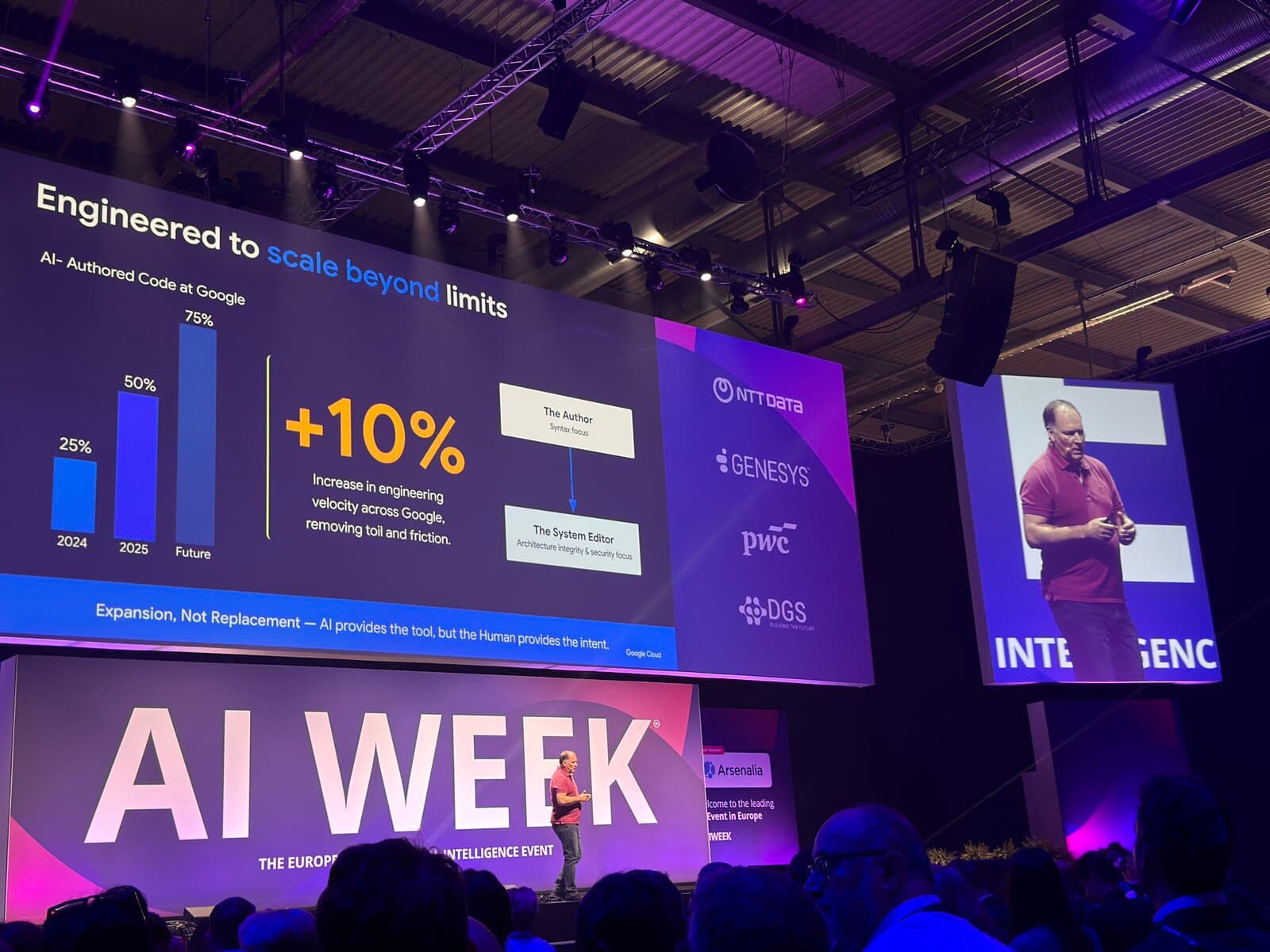
The Google-led sessions reinforced an important principle: artificial intelligence implementation requires engineering discipline. AI systems should not be deployed as uncontrolled experiments. They should be designed, evaluated, monitored, and improved through systematic processes.
This perspective is aligned with how serious software systems are built. AI does not remove the need for engineering. It increases the need for better engineering.
- Start with the business problem, not the model
- Design for reliability
- Keep humans in the loop
- Protect data from the beginning
- Measure outcomes, not excitement
07 · Why small and medium businesses need a different AI strategy
Large enterprises can afford AI departments, legal teams, consultants, and internal research groups. Small and medium businesses usually cannot. This creates a major adoption gap.
Many SMEs are exposed to AI through generic tools, subscriptions, or online hype. These solutions often fail to address the actual operational structure of the business. A hotel, logistics company, clinic, retail store, or local service provider does not need abstract AI innovation. It needs specific improvements inside daily operations.
- Faster customer communication
- Automated document processing
- Clearer financial reporting
- Internal dashboards
- Booking or appointment optimisation
- Inventory forecasting
- Process monitoring
- Staff task coordination
08 · Orya One's position: decision-grade software, not AI noise
The AI market is becoming crowded with tools that promise transformation without understanding the business context. This creates noise.
Orya One's position is different. We believe the future belongs to decision-grade software systems: systems designed to collect the right information, structure business processes, support human decisions, automate repetitive work, and introduce artificial intelligence only where it improves the operational model.
For a business, the question should not be: 'How do we add AI?' The better question is: 'Which decisions, workflows, and information systems can be improved through intelligent software?'
That is the question Orya One is focused on answering.
09 · The future of AI is practical, governed, and integrated
AI WEEK Milan confirmed that the conversation around artificial intelligence is maturing. The early phase was dominated by excitement, experimentation, and tool discovery. The next phase will be defined by integration, governance, measurable value, and operational reliability.
Artificial intelligence will matter most when it becomes part of well-designed software systems. Not every business needs an AI product. Not every workflow needs automation. Not every decision should be delegated to a model.
Every serious business should begin understanding where AI can improve operations, where it creates risk, and what kind of software infrastructure is needed before adoption becomes valuable. That is the purpose of Orya Intelligence: to analyse technology not as hype, but as a practical force inside business systems.
- AI
- events
- field-notes
- Milan