How Much Does Custom Software Cost in Greece in 2026?
Realistic 2026 cost ranges for custom software in Greece, from a €3,000 internal tool to a six-figure operational platform, plus what you will keep paying after launch.
Orya One
Guide8 min read
Key takeaways
- Indicative 2026 ranges: €3k–€12k for an internal tool, €12k–€40k for a portal, €30k–€120k+ for an operational platform, excluding 24% VAT.
- Roles, integrations and data migration move the price more than the number of screens.
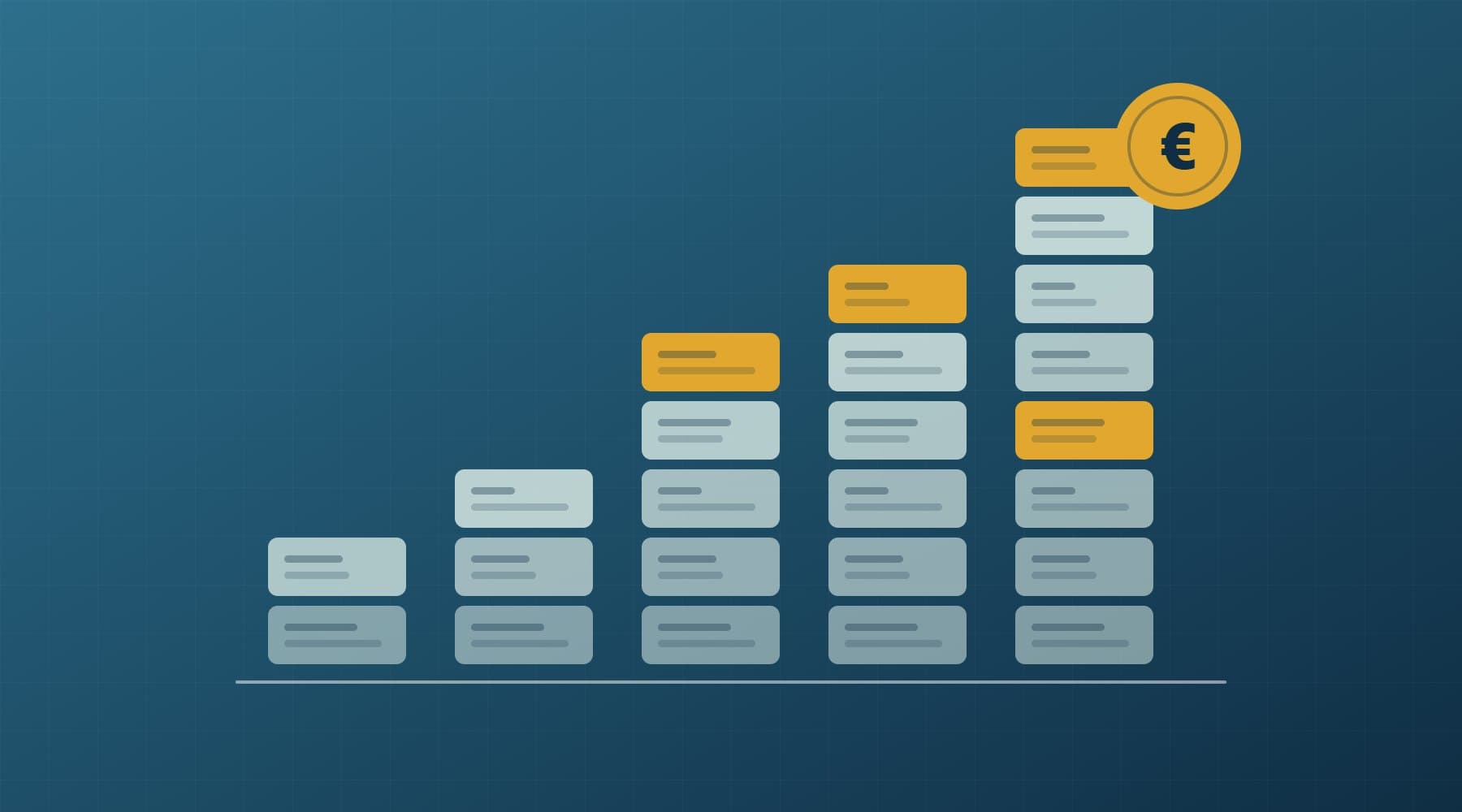
- Budget roughly 15–20% of the build cost per year for maintenance, plus hosting and licences.
- Phased delivery with a paid discovery step is the safest pricing model for most Greek SMEs.
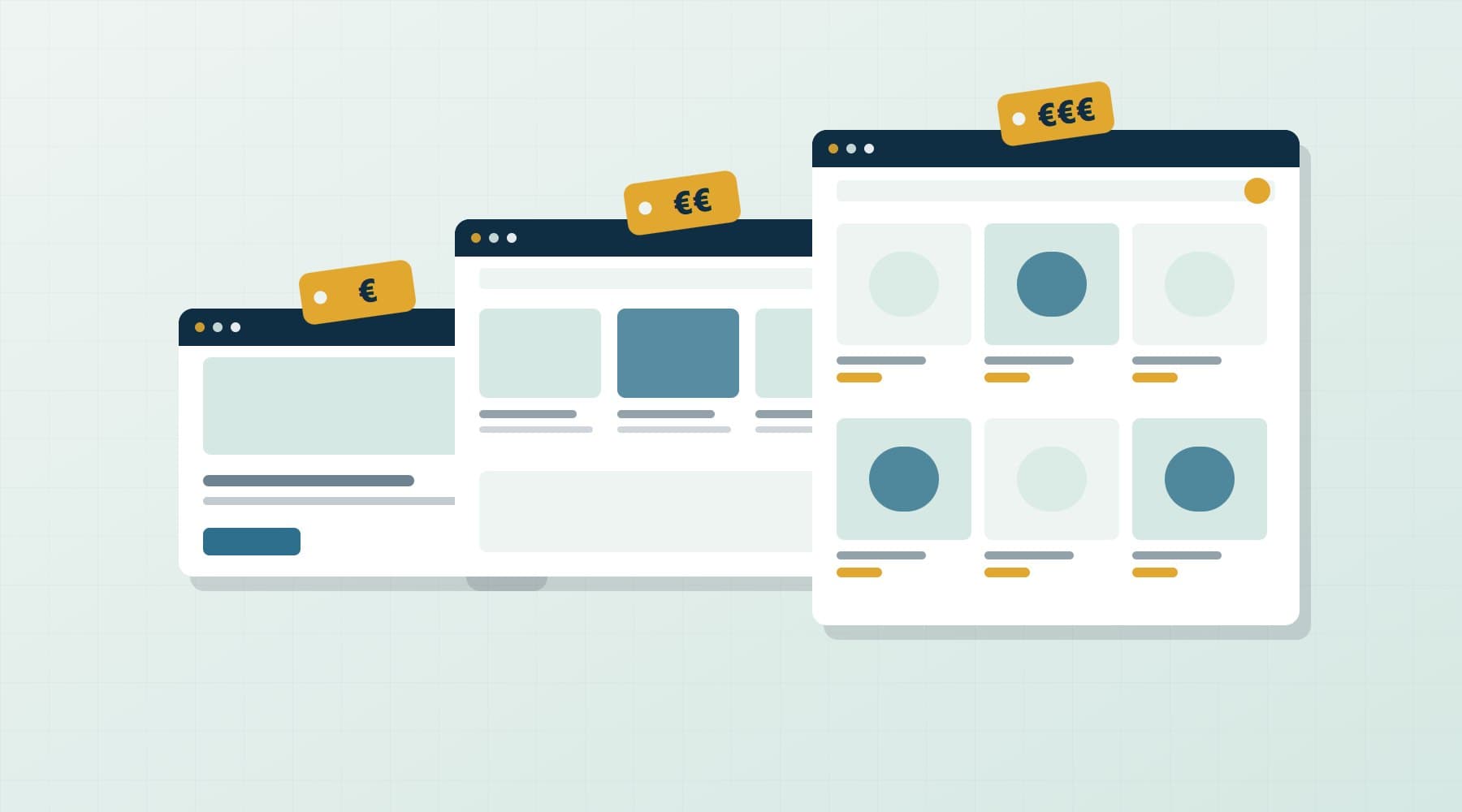
Custom software in Greece in 2026 typically costs €3,000–€12,000 for a focused internal tool, €12,000–€40,000 for a client portal with logins, and €30,000–€120,000 or more for an operational platform that runs a core part of the business. These are indicative market ranges for Greece and Southern Europe, before 24% VAT, and they move considerably with scope.
The wide spread isn’t vagueness. Two projects both described as “a portal” can differ in cost by a factor of five, depending on how many user roles, integrations and data migrations sit underneath. This guide breaks down where the money goes, how pricing models work, what you keep paying after launch, and how to compare quotes without being caught by a low number that grows later.
If you are still deciding whether to build at all, read custom software vs SaaS first. Building only makes sense when off-the-shelf tools genuinely don’t fit the way you work, or when the subscription bill for workarounds has become the bigger cost.
Indicative cost ranges by project type
| Project type | Typical scope | Indicative range | Typical timeline |
|---|---|---|---|
| Internal tool or automation | One workflow, 1–2 roles, replaces a spreadsheet or manual step, simple reports | €3,000–€12,000 | 3–8 weeks |
| Dashboard or reporting system | Connects 1–3 data sources, KPI views, filters, scheduled exports | €4,000–€20,000 | 4–10 weeks |
| Client or partner portal | Logins, documents, requests, status tracking, notifications | €12,000–€40,000 | 2–5 months |
| Operational platform | Several modules (orders, scheduling, stock, invoicing), multiple roles, audit trail | €30,000–€120,000+ | 4–12 months |
| SaaS MVP | Multi-tenant accounts, sign-up, subscription billing, core feature set | €20,000–€60,000 | 3–6 months |
| Integration (per system) | One API: accounting, e-invoicing provider, booking engine, payments, courier | €1,500–€8,000 | 1–4 weeks |
Treat the table as the start of a budget conversation, not a quote. A useful rule of thumb: if you can describe the system on one page and it has fewer than three user roles, you are probably in the lower half of its range. If it replaces something people use all day, assume the upper half.
What actually drives the cost
Cost is roughly the number of decisions the software must make correctly, multiplied by the number of different people it must make them for. In practice, six factors explain most of the difference between quotes.
Scope: screens, rules and automated jobs
List every screen and every background job (nightly imports, reminder emails, PDF generation). A system with 15 screens and two jobs is a different project from one with 60 screens and ten jobs, even if both are “an order system”. Business rules hidden in people’s heads, such as discounts that apply only to certain customers on certain days, are the most common source of under-estimation.
Roles and permissions
“Admin and user” is cheap. “Branch managers see only their branch, the accountant sees everything but cannot edit, external partners see only their own orders” is not. Every additional role multiplies the screens, the edge cases and the testing.
Integrations
Connecting to accounting software, a certified e-invoicing provider for AADE’s myDATA, a payment gateway, a booking engine or a courier API is often where budgets slip. A well-documented REST API is a known quantity. A legacy system with no API, or one that only exports a CSV by email, costs more and breaks more often. Greece’s phased rollout of mandatory B2B e-invoicing during 2026 has made invoicing integrations a common line item.
Data migration
Moving ten years of customer records out of Excel and an old desktop database can easily take 10–20% of a project. Expect duplicates, inconsistent VAT numbers, and the same customer written as “Παπαδόπουλος” in one file and “Papadopoulos” in another. Somebody has to decide which record is correct, and that somebody is usually you.
Design and user experience
An internal tool can be built on a clean, proven component library with little bespoke design. A portal your customers log into needs more care: branding, mobile layouts, onboarding, clear error messages, and often a Greek and an English interface.
Compliance, security and GDPR
If the system holds personal data, you need role-based access, activity logs, encrypted backups, retention rules, and a written data processing agreement with your developer and hosting provider, as required by Article 28 of the GDPR. Health or financial data raises the bar further. None of this is optional, so a quote that never mentions it has either hidden it in the price or left it out.
Fixed price, time and materials, or phased delivery
| Model | How it works | Best for | Risk to you |
|---|---|---|---|
| Fixed price | Agreed scope for an agreed price | Small, well-defined tools | The supplier prices in uncertainty; every change becomes a paid change request |
| Time and materials | You pay for days worked, usually against an estimate or cap | Evolving scope, ongoing development | Budget can drift without weekly reporting and a cap |
| Phased delivery | Fixed price per phase; the next phase is scoped after the last one ships | Most SME projects above about €15,000 | Needs the discipline to stop or change course after a phase |
For most Greek SMEs, phased delivery is the sensible default. Phase one is a paid discovery of one to three weeks that produces a written specification, a screen list and an estimate you can take to any supplier. Phase two is the smallest version that removes a real problem. Later phases add what actual usage proves is needed. At every step you hold working software, not a half-finished promise.
The costs that come after launch
The build cost is the visible part. Over five years, running costs can match it. Budget for these from day one:
- Hosting and infrastructure: roughly €20–€300 per month for most SME applications, covering the server or cloud platform, database, backups and file storage. More for heavy data processing or high traffic.
- Maintenance: a common rule of thumb is 15–20% of the build cost per year, for security patches, dependency upgrades, small fixes, and keeping integrations working when third parties change their APIs.
- Support: who answers when a user cannot log in on a Monday morning in August? Agree response times in writing.
- Licences and usage fees: transactional email, SMS, maps, e-invoicing provider fees, payment gateway commissions, AI API usage.
- Monitoring: uptime checks, error tracking and tested backups. Cheap to set up, expensive to skip.
- New features: software that gets used gets extended. Keep a small annual budget for improvements.
A worked example: a €30,000 portal with €100 a month of hosting and 18% annual maintenance costs about €6,600 a year to run (€1,200 hosting plus €5,400 maintenance) before any new features or VAT.
A sample budget for a B2B ordering portal
A hypothetical example: a distribution company in Northern Greece wants a portal where around 200 retail customers place orders, download invoices and track deliveries, connected to its existing ERP. An indicative budget might look like this.
| Line item | Indicative cost | Notes |
|---|---|---|
| Discovery and specification | €1,500–€3,000 | Workshops, screen list, data model, written estimate |
| Interface design | €2,000–€5,000 | Greek and English, mobile-friendly |
| Core build: accounts, roles, catalogue, orders | €10,000–€18,000 | Three roles: customer, sales rep, admin |
| ERP or accounting integration | €3,000–€7,000 | Depends heavily on the quality of the ERP’s API |
| Data migration | €1,500–€4,000 | Customers, price lists, open balances |
| Testing, launch and training | €1,500–€3,000 | Including a pilot with ten customers |
| Total build | €19,500–€40,000 | Plus 24% VAT |
| Year-one running costs | €4,000–€8,000 | Hosting, maintenance, minor changes |
How to reduce cost without killing quality
- Start with the smallest version that removes real pain. If orders arrive by phone and get lost, version one is order capture and status tracking, not a loyalty programme.
- Phase by value, not by module. Ship whatever saves the most hours first, measure it, then decide on the next phase.
- Use proven components. Login, payments, email, PDF generation and admin panels don’t need to be written from scratch. Good developers assemble these and write custom code only where your process is genuinely unique.
- Keep the off-the-shelf tools that work. Your accounting software probably stays. Integrating is cheaper than replacing.
- Clean your data before migration. An afternoon spent deduplicating your customer list in-house saves paid developer days.
- Name one decision-maker. Projects where three people give conflicting feedback take longer and cost more.
- Check whether public funding applies. Greece has run ESPA digital-transformation calls for SMEs in the 2021–2027 programming period. Eligible costs, rates and dates are set in each call, so check espa.gr or ask your accountant before you sign anything.
How to compare software quotes
Quotes for the same brief can easily differ by a factor of three or more. That is usually not greed or charity: the suppliers understood different projects. Make the quotes comparable:
- Send the same written brief to everyone, with your screen list, roles and integrations.
- Ask each supplier to list their assumptions and exclusions explicitly.
- Ask for the estimate broken down by phase or module, in days.
- Ask who owns the source code, database and hosting accounts at the end.
- Ask what happens after launch: warranty period, maintenance terms, response times.
- Ask to see working software they have built and maintained, not only websites.
Then compare like with like. A quote that is 40% cheaper but excludes data migration, testing and the first year of support is not cheaper.
Red flags in a software proposal
- A fixed price after a single phone call, for anything bigger than a simple tool.
- No written scope, or a scope that is one vague paragraph.
- The supplier keeps the source code or hosts it on accounts you cannot access.
- No mention of backups, security updates or GDPR.
- Everything is “custom”, including login and payments.
- You never meet the people who will actually build it.
- 100% payment upfront.
How Orya One approaches custom software projects
Orya One builds operational platforms, portals, dashboards and internal tools for businesses across Greece from Paralia Katerinis, and you talk directly to the people writing the code. We usually start with a short paid discovery, then deliver in phases, so you have working software early and decide the next step based on real use. You can see references such as the Cost-to-Profit Operating System, a dashboard for cost and margin visibility, on our selected work page, and read more about the custom software development service.
If you have a process that has outgrown spreadsheets, send a short description through the contact form. We will tell you honestly which range it is likely to fall in, and whether building is the right move at all.
Frequently asked questions
How much does custom software cost in Greece?
In 2026, indicative market ranges in Greece are about €3,000–€12,000 for a focused internal tool, €4,000–€20,000 for a dashboard or reporting system, €12,000–€40,000 for a client portal, and €30,000–€120,000 or more for an operational platform. Prices exclude 24% VAT and vary with the number of user roles, integrations, data migration and compliance requirements, so a written scope is needed for a reliable quote.
How much does it cost to maintain custom software each year?
A common rule of thumb is 15–20% of the original build cost per year for maintenance, covering security patches, dependency upgrades, small fixes and keeping integrations working. Hosting is extra, typically around €20–€300 per month for small and medium business applications. Licences such as email sending, SMS, e-invoicing providers or payment gateways add further costs, depending on usage.
Is fixed price or time and materials better for software development?
Fixed price suits small, clearly defined tools where the scope fits on one page. Time and materials suits evolving products, as long as you get weekly reporting and a budget cap. For most small and medium businesses, phased delivery works best: a paid discovery to define scope, then a fixed price for each phase, with the option to adjust or stop after each release.
How long does it take to build custom software?
A focused internal tool or automation usually takes three to eight weeks. A client portal typically takes two to five months, and an operational platform with several modules can take four to twelve months. Timelines depend on scope, how quickly decisions and feedback come from the business side, the state of the data being migrated, and the quality of third-party APIs.
Is custom software cheaper than SaaS in the long run?
Not always. SaaS is usually cheaper when a standard tool fits your process and you have few users. Custom software can become cheaper when per-user subscriptions grow, when you pay for several tools plus manual workarounds, or when your process gives you a competitive advantage. Compare five-year total cost, including build, hosting, maintenance and the staff time each option saves or costs.